
ADHESIVES
Adhesives create permanent structural bonds between wood, metal, concrete, plastic, glass, and masonry for construction, woodworking, and repair projects. Use the filters below to find the right formula based on your substrate, application, and performance requirements.
Popular Adhesive Projects
Watch step-by-step tutorials for construction bonding, woodworking, and quick repairs.
Kitchen and Bath
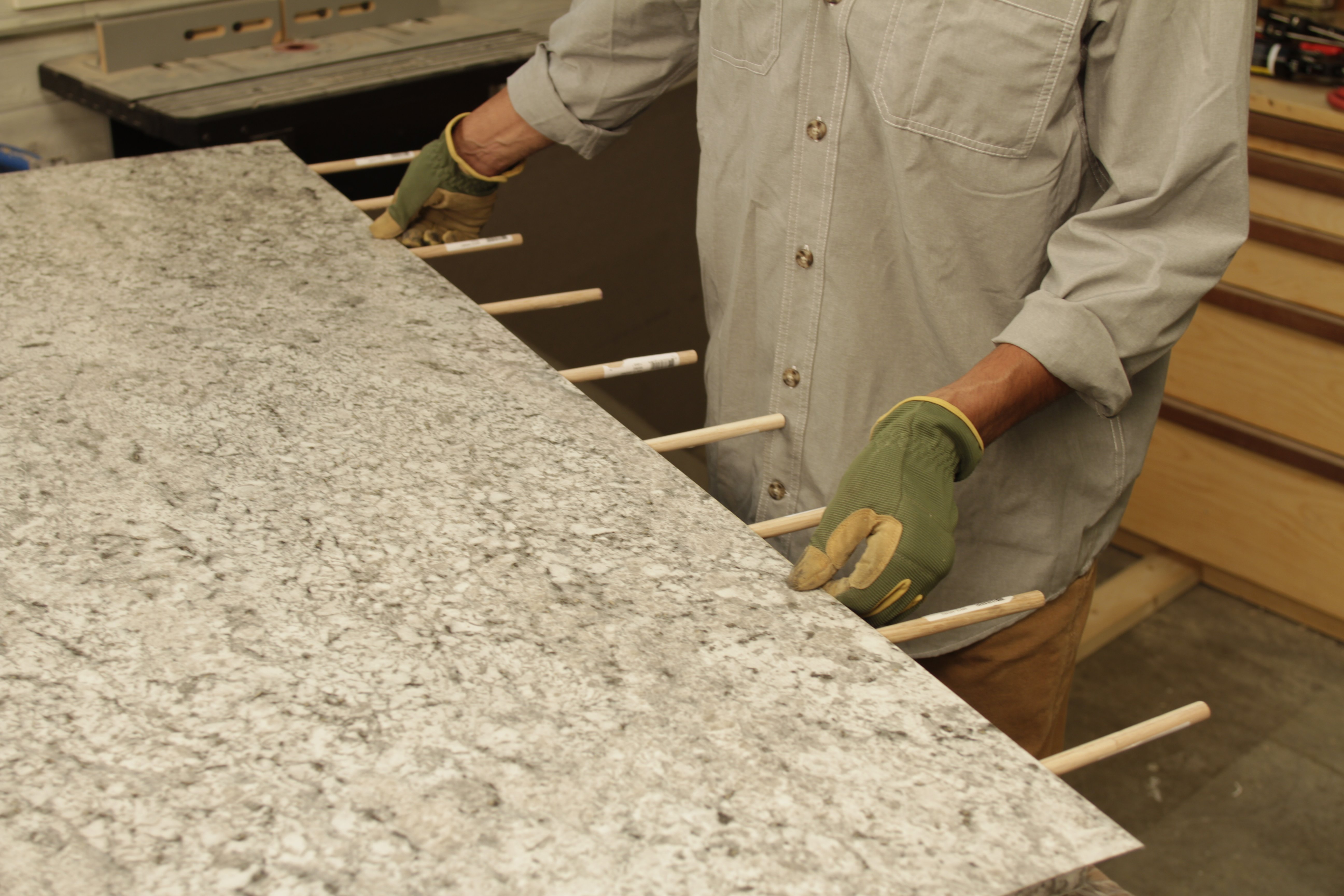
How to Laminate Countertops
Learn how to laminate countertops step by step using contact cement, from cutting and positioning to trimming edges and sealing joints
view project1/0
Frequently Asked Questions
Most construction adhesives are paintable once fully cured, typically after 24 hours. Latex-based construction adhesives accept paint readily, while polyurethane and hybrid formulas may require longer cure times before painting. Always verify on the product label, as some specialty adhesives are not paintable. For best results, test paint adhesion on a small cured area before finishing the entire project.
Yes, construction adhesive works on wood and is ideal for structural applications like subfloors, stair treads, and paneling where you need gap-filling capability or are bonding wood to other materials like concrete or metal. For furniture, cabinetry, and trim with tight-fitting joints, wood glue provides a stronger bond because it penetrates wood fibers. Both can be used together for maximum holding power.
Most construction adhesives reach initial set in 20-30 minutes and can be handled within 24 hours. Full cure typically takes 7 days depending on temperature, humidity, and substrate porosity. Fast-grab formulas may bond in as little as 10 minutes for repositioning. Always check product label for specific cure times before applying load or stress to the bond.
It depends on the formula. Standard PVA wood glue (white or yellow) is water-resistant when cured but not waterproof for continuous water exposure. Polyurethane wood glues and Type II/Type III rated wood glues are fully waterproof and suitable for outdoor furniture, marine applications, and high-humidity environments. Check the product label for water resistance ratings before use in wet conditions.
Super glue (cyanoacrylate) works on most rigid plastics like ABS, PVC, and polycarbonate. For flexible plastics or polyethylene/polypropylene, use specialized plastic adhesives or epoxies formulated for low-surface-energy materials. Construction adhesive with hybrid or polyurethane formulas also bonds many plastics. Always test on a small area first, as some adhesives can damage certain plastic types.
Construction adhesive is formulated for multi-surface bonding (wood, metal, concrete, plastic) with gap-filling properties and flexibility, making it ideal for structural applications like subfloors, drywall, and paneling. Wood glue is specifically designed for wood-to-wood bonds, penetrating wood fibers for maximum strength in furniture, cabinetry, and trim. Use construction adhesive for mixed materials or larger gaps, and wood glue for tight-fitting wood joints.
Epoxy adhesives provide the highest bond strength for most applications, with some formulas exceeding 3,000 PSI tensile strength. However, "strongest" depends on your substrate and application. For wood-to-wood bonds, quality wood glue can be stronger than the wood itself. For multi-surface or structural applications, polyurethane and hybrid construction adhesives offer excellent strength with flexibility.